
Frontier History shaped by climate over 60 000 years
The seasons are shifting and it made me think about the way climate has affected historical stories. I recently did a little chat about it, if you missed it, there is a link below, however, that aside, it did get me keen to expand a little on the subject for you.
For more than sixty thousand years, human life on the frontier has been shaped a little less by conquest and politics, and more by something far less negotiable
The scope of my thinking is 60 000 years and how we in the Eastern Cape could be seen as a climate frontier. A frontier in this sense being a place where different climate systems meet, overlap, and pull in different directions, so nothing ever quite settles into a steady pattern. It’s a bit unpredictable. And the Eastern Cape sits right in that kind of space.
Stand anywhere across this region near Makhanda and the land appears calm. A vision which belies the dramatic history of the land. Today when you see fields, farms, and homesteads it suggests permanence and ownership. But looking backward over time, this landscape has never truly been fixed. Or as easy on life as it can appear.
Our rainfall arrives unevenly, with droughts returning without warning. Our seasons shift just enough to determine survival itself. But what stands out in this story is that every society that entered this frontier inherited the same environmental question.
How do you live on a land that alternates between abundance and scarcity?
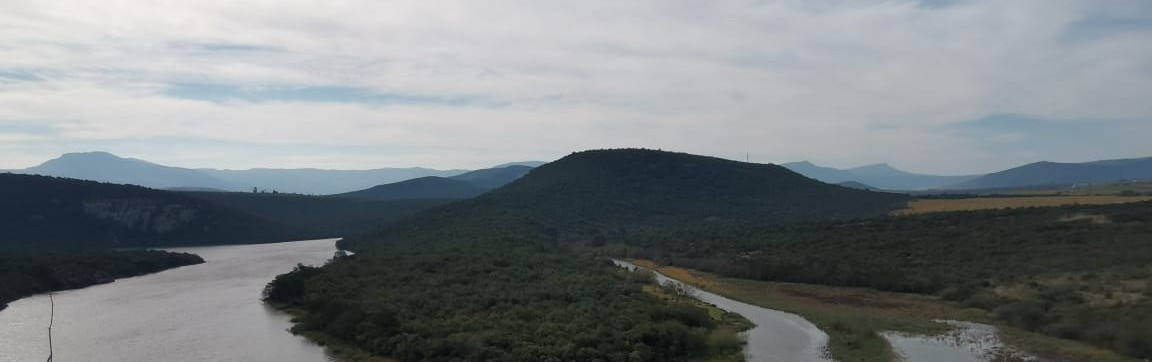
The history of this frontier is not simply about one group replacing another. It is more a story of how different people learned, in their own ways, to live with the land, adjusting how they grazed animals, grew crops, surviving in a climate that wasn’t predictable.
This is a longer reflection, best read when you have a few minutes to settle in!
Mobility shaped by survival for centuries
The first people to live in this frontier arrived tens of thousands of years ago, these were Stone Age hunter-gatherers, ancestors of later San communities. For them, the land was not something you claimed and owned.
There were no fences and no cultivated fields marking territory. People moved with the seasons, following game, gathering edible plants, and returning to water sources they knew could sustain life.
Archaeological evidence shows that communities came back again and again, but they did not stay permanently. And the reason is simple, the climate would not allow it. When rains were good, animals thrived and food was plentiful. When drought returned, survival meant moving on.
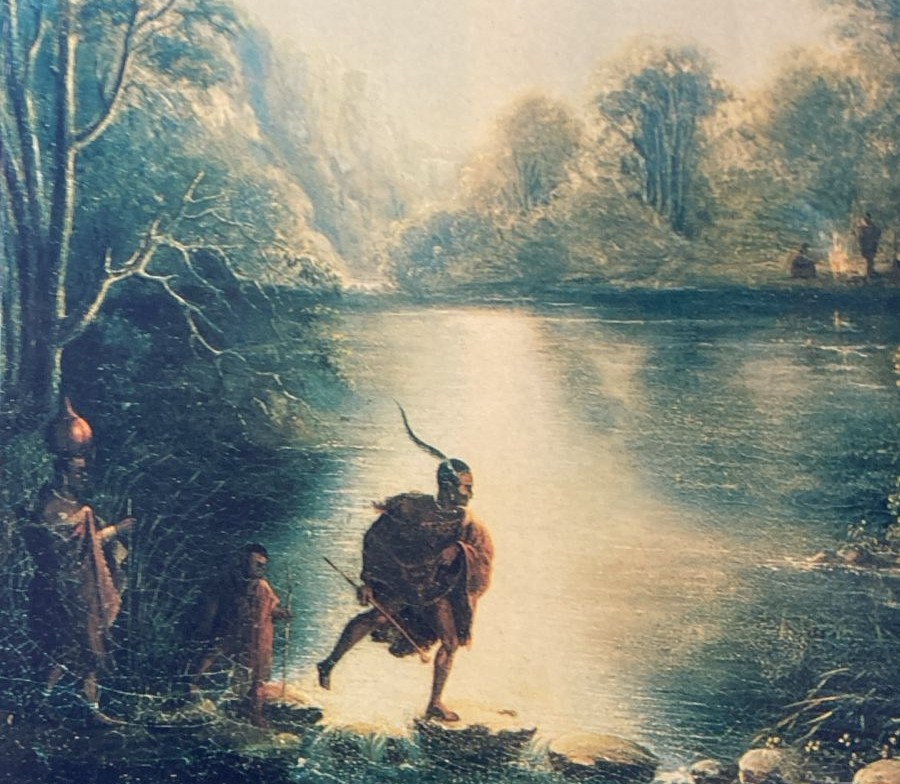
Their movement wasn’t aimless wandering. It was knowledge passed on generation to generation. I can almost see an individual standing clothed in an Antelope loin cloth with digging tool in hand and bow and arrow slung over the shoulder – watching the land, reading the weather. Knowing when to stay and when to move on.
Imagine that for tens of thousands of years mobility remained the dominant adaptation. Until only a short time ago, about two thousand years, life on the frontier began to change in a noticeable way.
What changed with the Khoisan arrival around 2000 years ago
The people of the land were no longer living only from what they hunted or gathered, Khoisan herders arrived with sheep and cattle, and suddenly wealth could move with you instead of being tied to one place. Livestock changed everything. If conditions worsened in one area, people could simply move their herds to better grazing. Of which as we know the frontier offered. At this time land tenure centred on grazing access, not cultivation.
They would make camp here with a cattle kraal made from thorn branches and grass huts surrounding it. The kraal was the heart of the settlement because livestock were wealth, status, and survival. When climate changed, they moved with it, packing up easy to carry structures and moving to better grazing.
The climate discouraged fixed agriculture for them with the unpredictable rainfall making large-scale cropping risky.
Pastoralism at this time in our history refined mobility without abandoning it.
From around the twelfth century onwards, Nguni-speaking communities, including emerging Xhosa chiefdoms, began moving into the river systems of the Eastern Cape. Bringing with them a new way of living, combining livestock and agriculture as we understand it today.
Where did the livestock come from you might ask?
Sheep came first from the Middle East from the Fertile Crescent. Around 10000 years ago they spread gradually into North Africa, with pastoralists moving south down the East Coast of Africa. Archaeology shows the earliest sheep remains in southern Africa around Namibia and the western coastal belt, before spreading east and south.
Cattle arrived slightly later but followed a similar path, traced back to North-East Africa, especially along the Nile Valley. These cattle adapted to African diseases and of course our climate, becoming African breeds and following a similar path south. Over many generations, sheep and cattle moved through exchange networks, rather than one single migration.
Cattle societies that also cultivated the soil
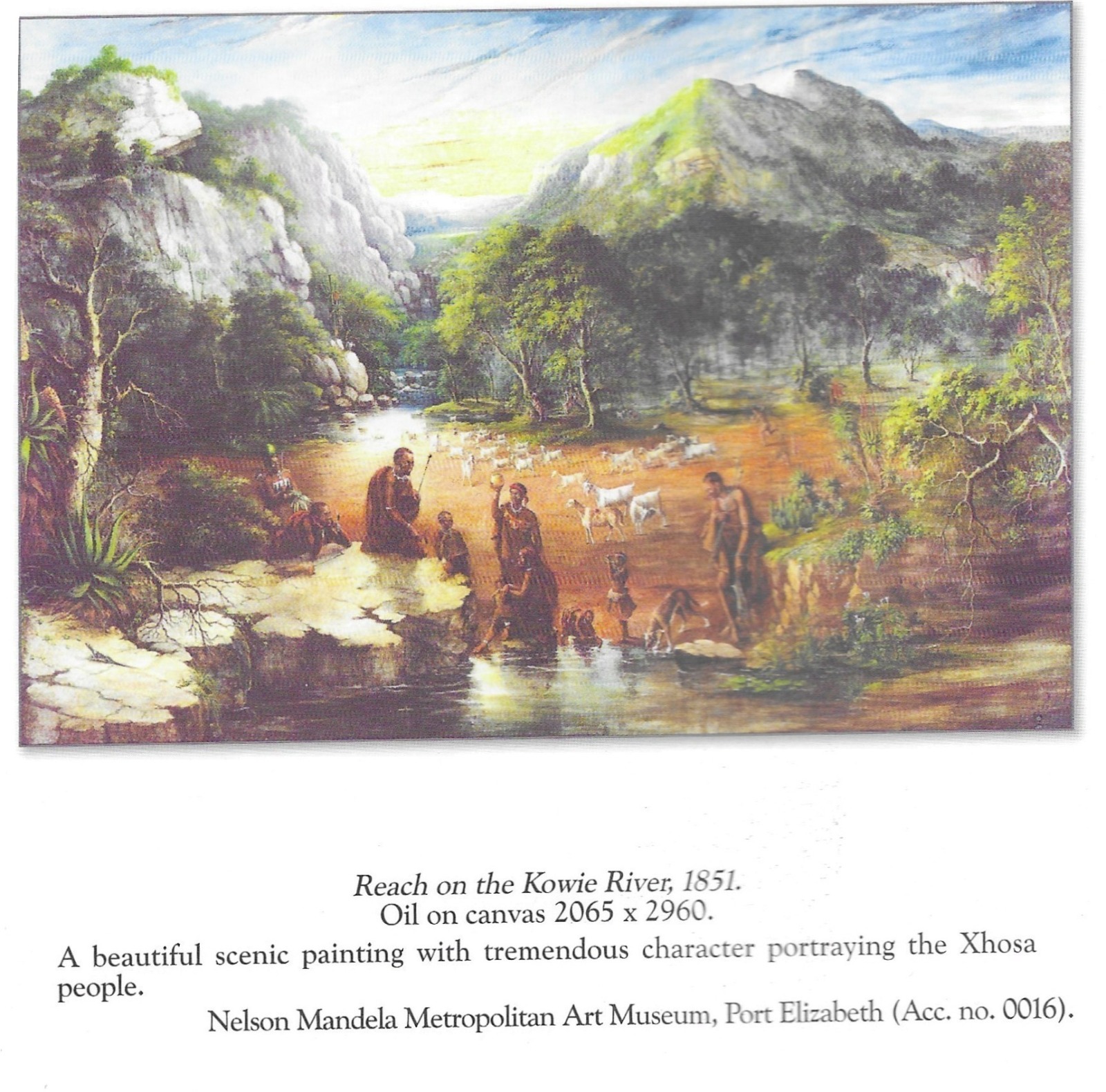
Cattle still sat at the centre of life because they represented wealth, status, marriage alliances, spiritual connection, and indeed, political power. The difference here is that they were not singularly reliant on grazing. Farming became just as vital to survival. The frontier landscape made this possible with its moist river valleys and the better-watered slopes allowing the growth of crops like sorghum, millet, pumpkins, and beans, and later maize, when of course rains were good. The farming was never random. Crops were planted with an understanding of seasonal rainfall and local conditions learned through generations.
Their settlements reflected that knowledge of the land with homesteads placed close to fertile soils and dependable water, while fields were worked during good seasons. At the same time, cattle ranged across wider communal grazing lands under the authority of chiefs. If pasture failed or rainfall shifted, communities could move within recognised territorial areas rather than remain tied to a single spot.
This was not fixed farming in the European sense of permanent fields and immovable farms. Settlements were made up of umzi, one family with generations living together in a cluster of huts surrounding a cattle kraal. Rather than these forming dense villages, homesteads were scattered across the landscape, positioned near fields, grazing, and water.
Crops provided daily food security. Cattle provided wealth and a safety net when harvests failed. Together, agriculture and pastoralism formed a balanced strategy for living on a frontier shaped by its changing weather.
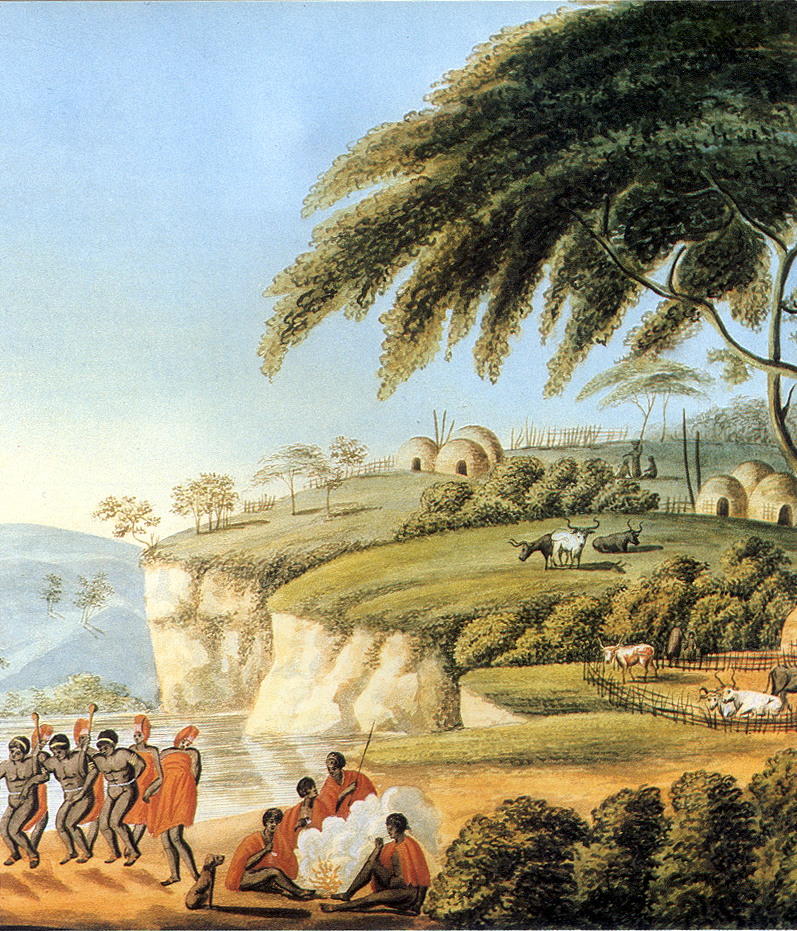
Titled “Xhosa woonwyse en kleredrag” (Xhosa way of living and clothing) by Ludwig Alberti. Published in 1810 as part of his account of the tribal life and customs of the Xhosa people.
Trek Boers and the search for arable land
When Dutch-speaking trekboers pushed east out of the Cape Colony in the late eighteenth century, they were not stepping into empty land. They entered a frontier already shaped by generations of grazing, movement, and cultivation. Like the communities before them, trekboer families lived by their livestock. Cattle and sheep were their security. But they were also looking for good farming ground.
In the western Cape, wheat farming had driven the economy, and many settlers arrived here expecting to recreate that same agricultural world. The frontier quickly taught them otherwise.
Rainfall as we know through stories of centuries before, was unpredictable. The seasons did not follow the neat Mediterranean pattern they knew further west. Some years were generous, others failed completely. Large-scale grain farming proved far less reliable than expected. So settlers adapted, slowly and sometimes reluctantly.
Stock farming remained central, while crops were planted where conditions allowed, usually along rivers or in fertile pockets of soil. Early farms were not yet the fixed agricultural estates we imagine today. They operated more like extended grazing spaces.
Families moved with their animals when pasture declined, testing which crops might survive local conditions. It worked more like a mobile livestock operation with experimental farming attached to it.
Early trekboer farms on the frontier were vast on paper, but surprisingly lightly used in practice. Colonial authorities granted huge “loan farms” that stretched across thousands of hectares, but only a small portion of that land was ever actively worked on. In reality, these farms were mainly grazing territory, with families settling close to water while the wider land remained open for livestock.
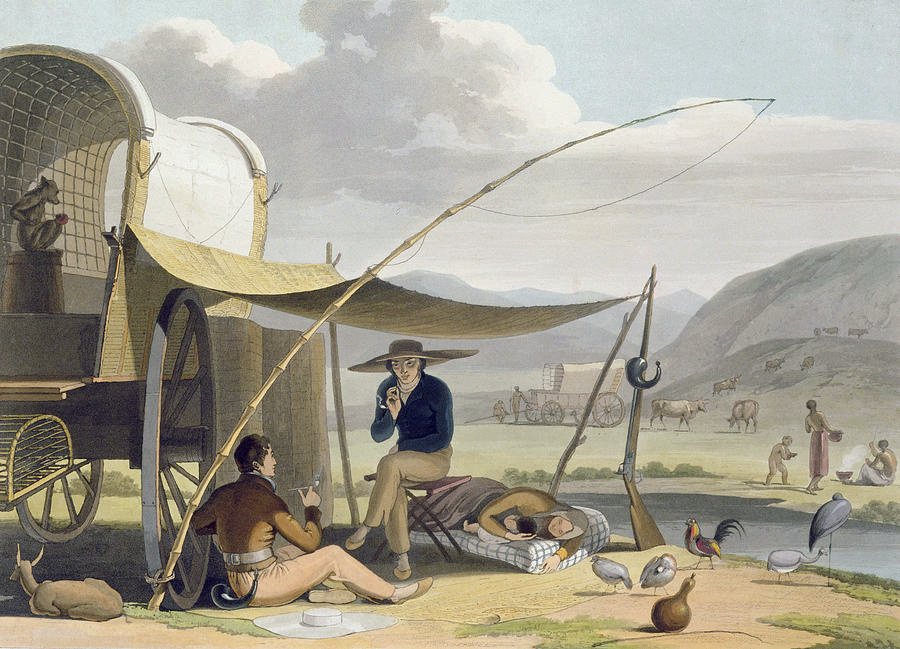
Trekboers making camp (1804), aquatint by Samuel Daniell :Public domain, Wikimedia Commons
What we probably don’t imagine when we think about this time in history, is that these homesteads themselves were often simple and temporary, a basic structure of clay, reeds, or timber that could be built quickly and just as easily left behind if conditions changed. Families were not always fixed in one place either; when grazing failed or drought set in, they would move with their animals to another part of the farm, sometimes beyond it. The idea of one fixed farmhouse developed later.
That turning point was when the colonial administration began surveying land, issuing grants, and turning landscape into legally defined property. Space that had long been shared, negotiated, and adjusted to changing conditions was now measured, fenced, and owned.
A frontier that had always rewarded movement was suddenly expected to support permanence.
Fixing farms onto an uncertain climate
British colonial expansion after 1812 sought to stabilise the eastern frontier through towns, military posts, and organised settlement schemes. Permanent agriculture became a central goal.
Settlers introduced ploughed fields, orchards, and enclosed farms, attempting to replicate European agricultural models. Wheat, maize, vegetables, and later commercial farming systems spread across suitable soils, particularly along rivers and valleys. The frontier did indeed, on the face of it, possess agricultural potential. Fertile soils and seasonal rainfall could produce abundant crops in good years. But the climate imposed limits.
Drought cycles repeatedly disrupted harvests. Floods alternated with dry spells. Earlier societies had absorbed these fluctuations through movement and diversified livelihoods but fixed farms struggled when seasons failed.
For the first time in its history, the landscape was expected to behave predictably. It never fully did.
Across sixty millennia the frontier reveals an enduring pattern
Over this period the environment remained broadly constant while human strategies for survival and wealth evolved.
Hunter-gatherers moved with ecological rhythms. Khoisan pastoralists managed grazing landscapes. Nguni societies combined cattle and crops in flexible agro-pastoral systems. Trekboers pursued grazing and experimental farming. Colonial settlers imposed fixed agriculture and surveyed ownership.
Each system represented a new attempt to answer the same environmental challenge – how to secure food, wealth, and stability in a climate defined by variability.
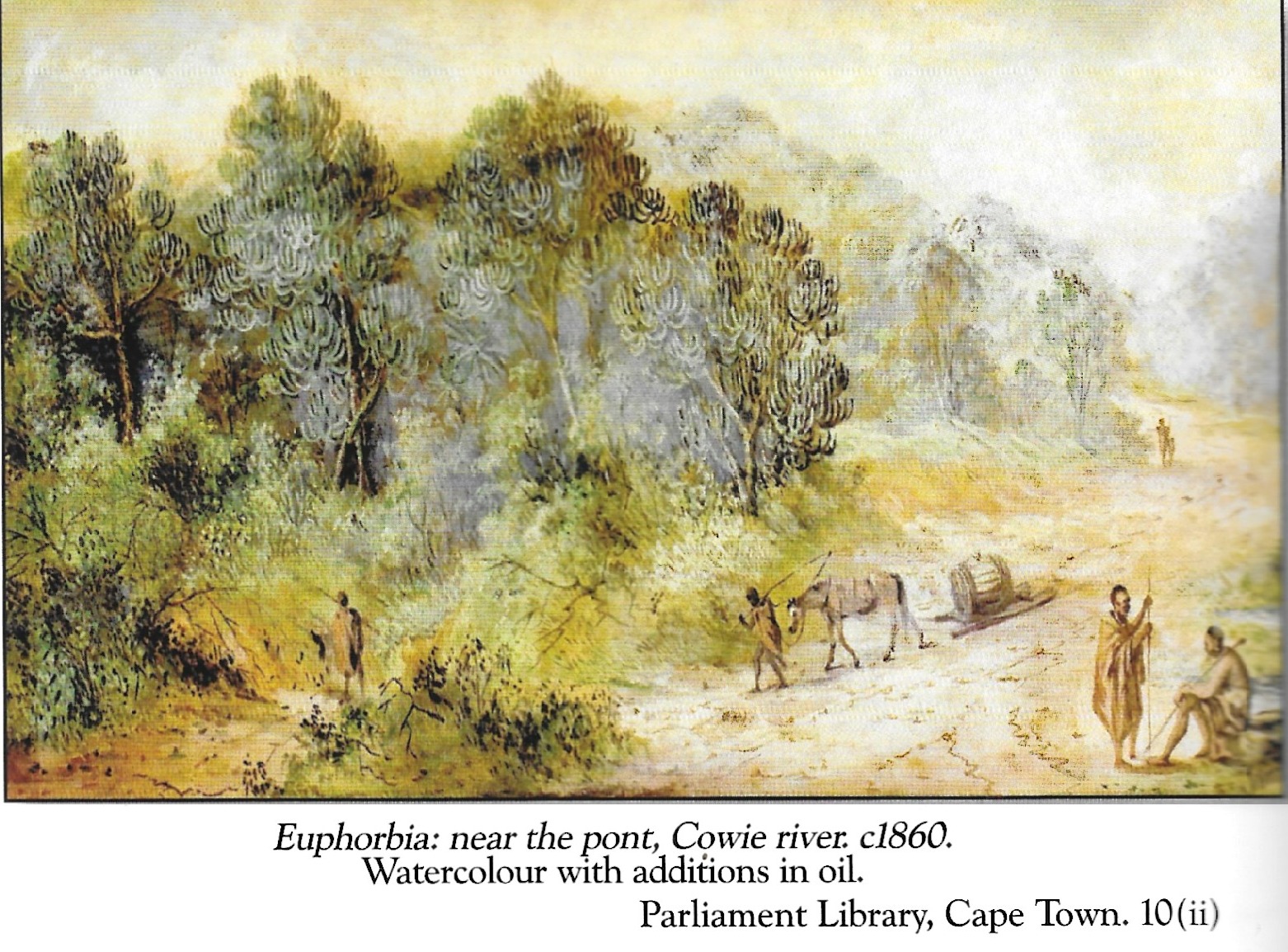
Seen over this long arc of time, the frontier is more than just a backdrop to local history. It really becomes a living example of how people adapt to survive. For tens of thousands of years, societies here made it work by keeping things flexible, balancing grazing with farming, and never relying on just one way of living. Crops could be grown, but only when they were part of a wider system. Cattle helped carry families through bad harvests, movement took pressure off the land, and having a mix of strategies is what kept people going.
The frontier’s deeper lesson
It was only in the nineteenth century that there was a real push to remove that uncertainty, to fix boundaries, fence land, and build permanent farming systems as if the landscape could be made predictable. But the frontier has always pushed back against that idea. It still shows that landscapes are active participants in history. The soils can support crops when conditions allow. The grass can sustain herds when the rains come. And the climate, more than anything, keeps reminding us that control is never complete.
In the end, this was never just a story written by people alone. On this climate frontier, it was weather, grazing, and farming together that shaped the long story of survival.
Till next time
Alan
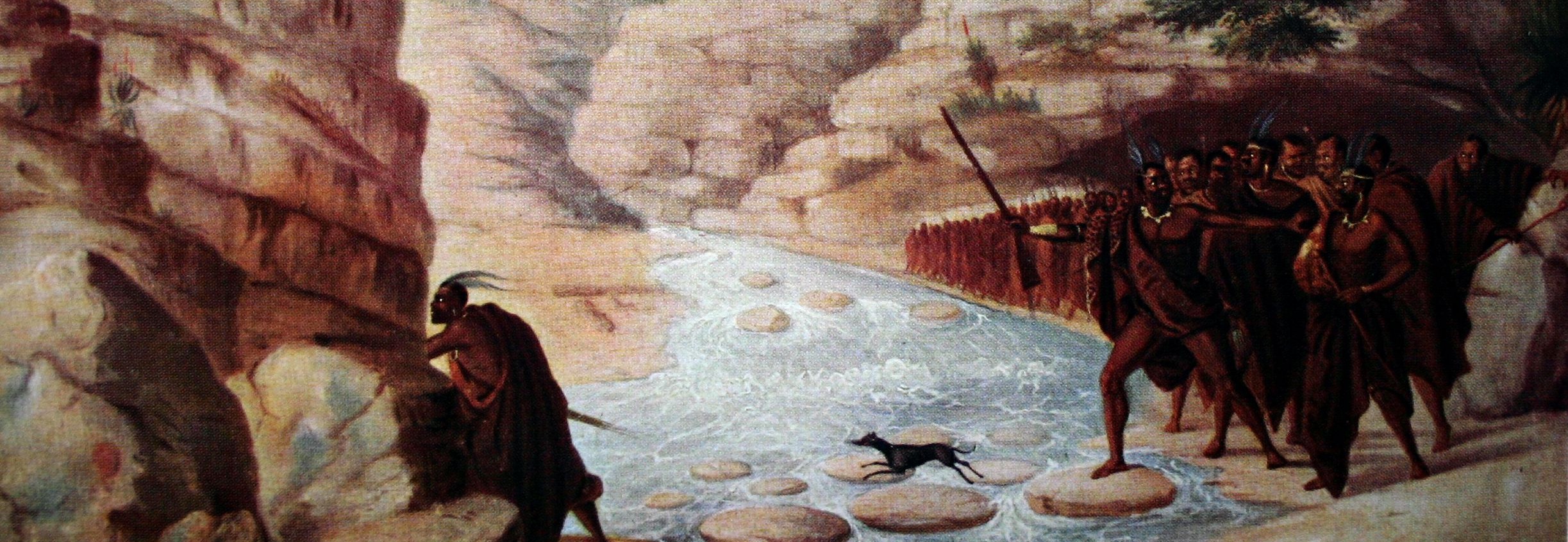
Column of Xhosas crossing a River in a Deep Ravine”, painting by Frederick Timpson I’Ons (1802-1887) : Wiki Commons